



Trakk
Logistics & Transportation
In the first 6 months, the client acquired initial paying customers, over 50 drivers signed up and the app reached 100+ downloads, validating the product concept.

We build connected platforms for transport companies, freight teams, drivers, partners, and customers—turning fragmented workflows into dependable digital operations.
In the first 6 months, the client acquired initial paying customers, over 50 drivers signed up and the app reached 100+ downloads, validating the product concept.
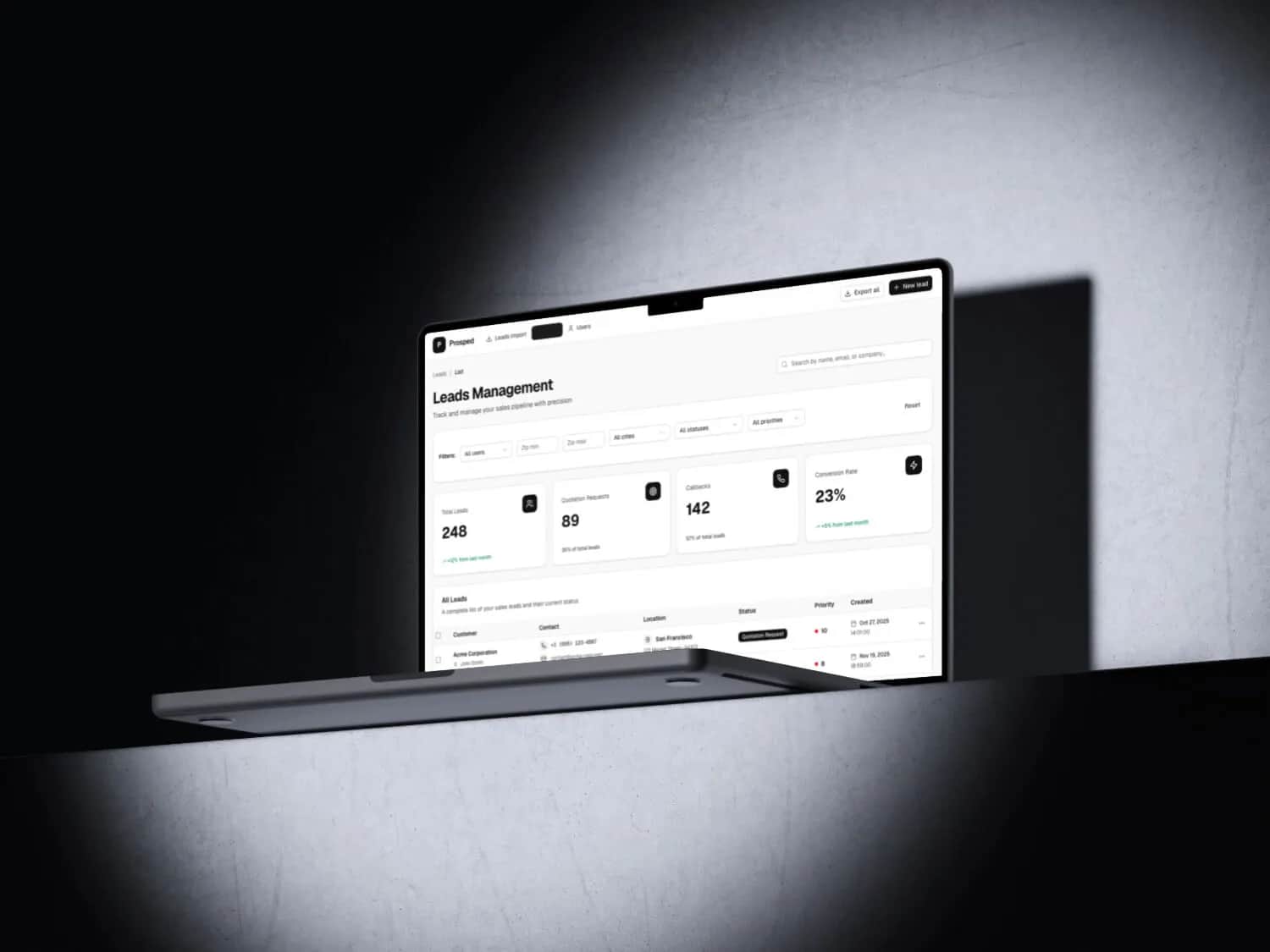
The platform is actively used, developed and supplemented with new features. Currently, there are more than 30,000 leads, more than 20 sales managers and increased sales in the company from the systematic use of the new tool.
5.0
Verified clients rate us 5★ on Clutch and highlight professional delivery, clear communication, and reliable timelines.

A logistics project starts with the workflows and integrations research to build relevant tool for your business.
We identify roles, handoffs, exceptions, data ownership, and the moments where delays or errors are most expensive.
Critical systems and APIs are introduced in controlled stages with clear failure handling and observability.
Performance, access control, support, and deployment are treated as product requirements from the start.
We test delays, missing updates, partner outages, role boundaries, and other scenarios that affect daily operations.
Logs, support requests, team feedback, and product metrics guide the next improvements after launch.

Delivery decisions are grounded in operational continuity, system ownership, and the realities of time-critical transport workflows.
We plan releases, fallbacks, monitoring, and support around operations that cannot pause when a new platform goes live.
Sources of truth, API responsibilities, retries, and failure handling are defined before connected workflows are implemented.
Delays, missing scans, partner outages, and manual overrides are treated as core workflow states rather than edge cases.
Dispatchers, drivers, partners, and customers receive the actions and status information relevant to their responsibilities.
Operational metrics, support requests, and team feedback create a practical backlog after launch.
Yes. We first review the available APIs, data ownership, security constraints, and failure scenarios, then scope the integration around the systems that must remain authoritative.
Tell us about your project — we’ll come back with ideas, timeline, and a clear roadmap.